Random review of cases
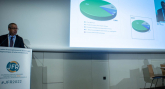
« Quality control is not an evaluation of radiologists, he explains at the outset. It’s not about giving good or bad marks. It’s a rigorous, but supportive, review. It’s also a collective process of improvement centered on dialogue between colleagues who volunteer to take part in it. » This quality control reflects the organization’s wish to run a quality medical project and support collective work. Marc Zins explains the method behind this quality control: it involves a random review of cases carried out by experts recognized in their sub-specialty, in particular university hospital professors. The review rate varies depending on the sub-specialty and needs, with a maximum of 5% of all examinations. Any discrepancies found and the corrective actions taken are then logged.
Examination request and accuracy of the report
Several elements are gathered for this quality control. It starts with the patient’s care pathway, with the examination request, to assess its relevance and the quality of the clinical information, then the choice of examination protocol. Next comes the quality of the acquisition, the accuracy and completeness of the report and how it is communicated to the patient and the referring physician. It ends with whether or not a structured reporting tool (KeyDiag) was used.
« Over the last four months, review of whole-body CT scans has required a correction to the report in 9.3% of cases. »
This quality control is graded from 0 to 4, with 0 corresponding to full compliance, and 4 indicating the presence of drafting or interpretation errors with potential, confirmed clinical consequences. These discrepancies can be reported either by the person in charge of the review or by the requesting physician. « In practice, we focus on grades 3 and 4, which always trigger a dialogue between the person in charge of the review and the teleradiologist », explains Marc Zins. In 2021, 71% of reviews found no abnormality. Grade 4 anomalies accounted for 1% of cases, compared with 4% for grade 3 anomalies. « Over the last four months, review of whole-body CT scans has required a correction to the report in 9.3% of cases », the speaker adds.
A surge in requests for help
« It’s the teleradiologist himself who puts the corrective actions in place, and who personally calls the referring clinician or the patient », the radiologist continues. In the event of a discrepancy, a consensus wording can be discussed for a report. The referring specialist may need to call on other experts for complex cases. Requests for help have surged in 2022 « for a number of reasons », explains Marc Zins. In order of frequency, the top three areas concerned are emergency imaging, musculoskeletal imaging and digestive imaging. Marc Zins ends his presentation by mentioning training and innovation measures in support of service quality. He notably mentions the webinars offered since 2021, and the use of structured reporting and artificial intelligence tools.
The rest of the article can be found on the Docteur Imago website